Please click here to access the podcast version of this blog post.
There are three forms of visual art: Painting is art to look at, sculptor is art you can walk around, and architecture is art you can walk through.
Dan Rice
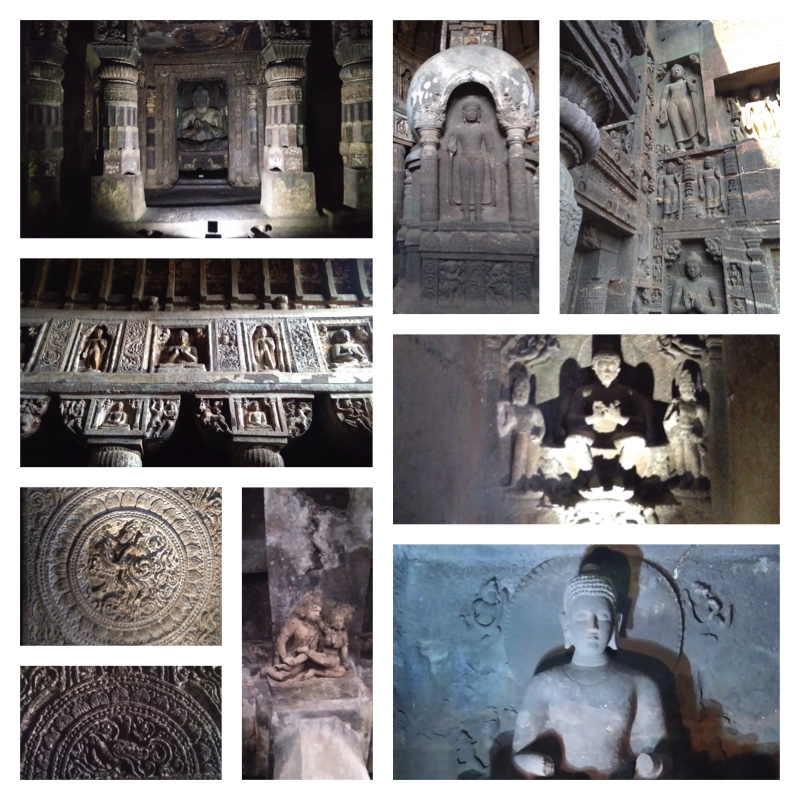
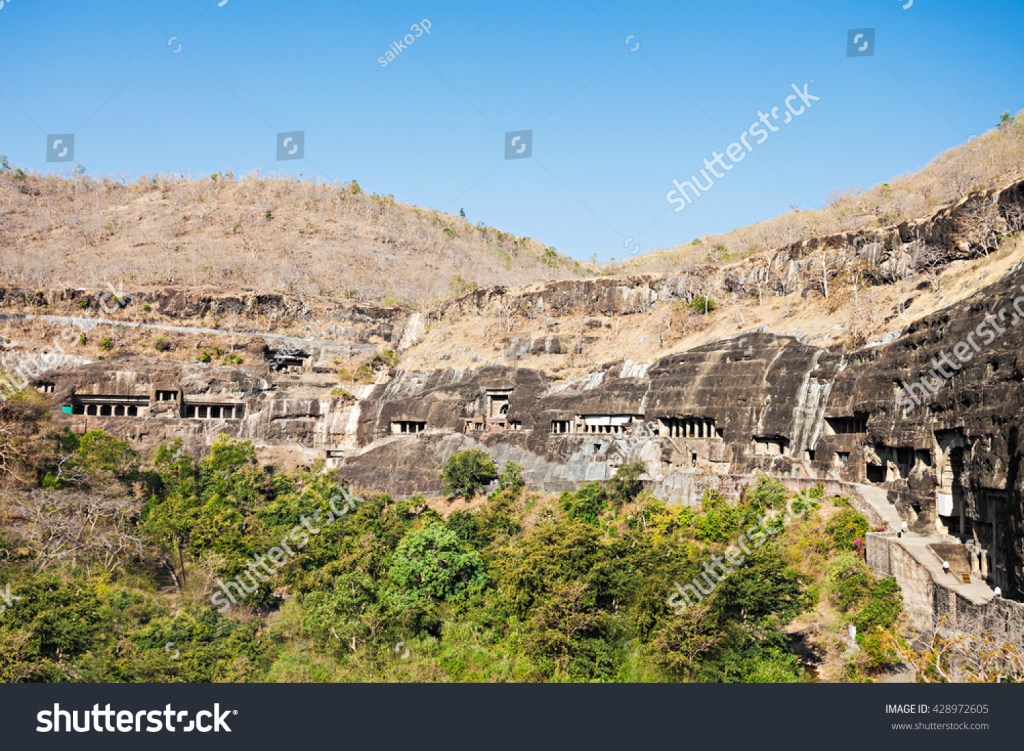
You can find an amazing combination of all these three art forms in just one place: the womb of Ajanta Caves. Situated in the Sahyadri Plateau of Maharashtra, India, these caves conceive the India’s oldest paintings and sculptures that has been influencing the art that exist today. The serenity of flowing Waghora river enhances the beauty of the caves. Being deemed as one of the World Heritage sites, Ajanta caves make India proud.
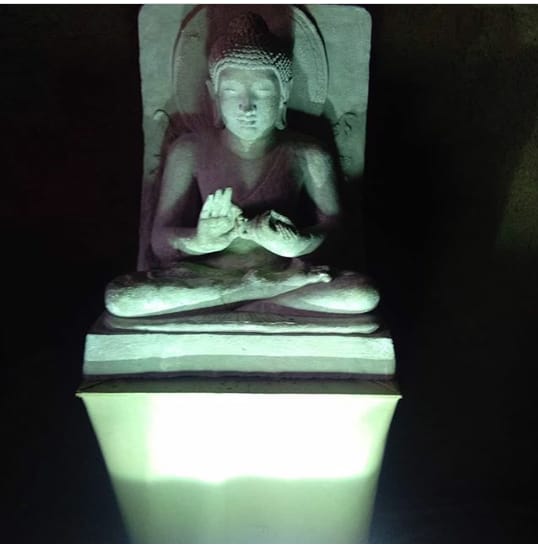
In the caves, you can find the depictions of the compassionate philosophies of Lord Buddha. I am so lucky to have been there. There are total 30 caves that are aligned in the shape of a horseshoe(hemisphere direction). These enchanted caves were made by the monks who were followers of lord Buddha as a retreat from the world and attain Nirvana (a stage of life when a person dissociates from all desires and pleasures).
The artwork presented in the caves sets the epitome of India’s skilled ancient artist. The monks actually started making the caves in the 2nd Century BC. It continued to be built and decorated till 6th century BC. After that, it was lost for decades. In 1819, John Smith, a British officer rediscovered these caves. This increased the scope of researching and discovering ancient Indian art. These artworks are so explanatory that they finely reveal Indian cultures and rituals. There are no words to express in detail about Ajanta Caves, but you can only experience it by physically visiting this place. Thus, I would try to analyze the three art forms of Ajanta caves: Architecture, Sculptures and Paintings.
Architecture
With the goal of attaining nirvana and surviving on the offerings of people, the monks used to walk around the world for the whole year. When it was time for rainy season, they used to build caves to stay and worship. The great Ajanta Caves is made by such monks.
There are thousands of caves on earth, but what is so special about Ajanta caves? The monks have set an excellent example of ancient architecture to the whole world by carving 30 caves in one huge rock. Hence, the monks used the rock-cutting technique to build these caves.
Usually all the buildings or architectural art forms are built from the bottom to top, but these caves are built in the direction of top to bottom.
The caves are built in continuity. Steps were also built, since some caves are elevated from each other.
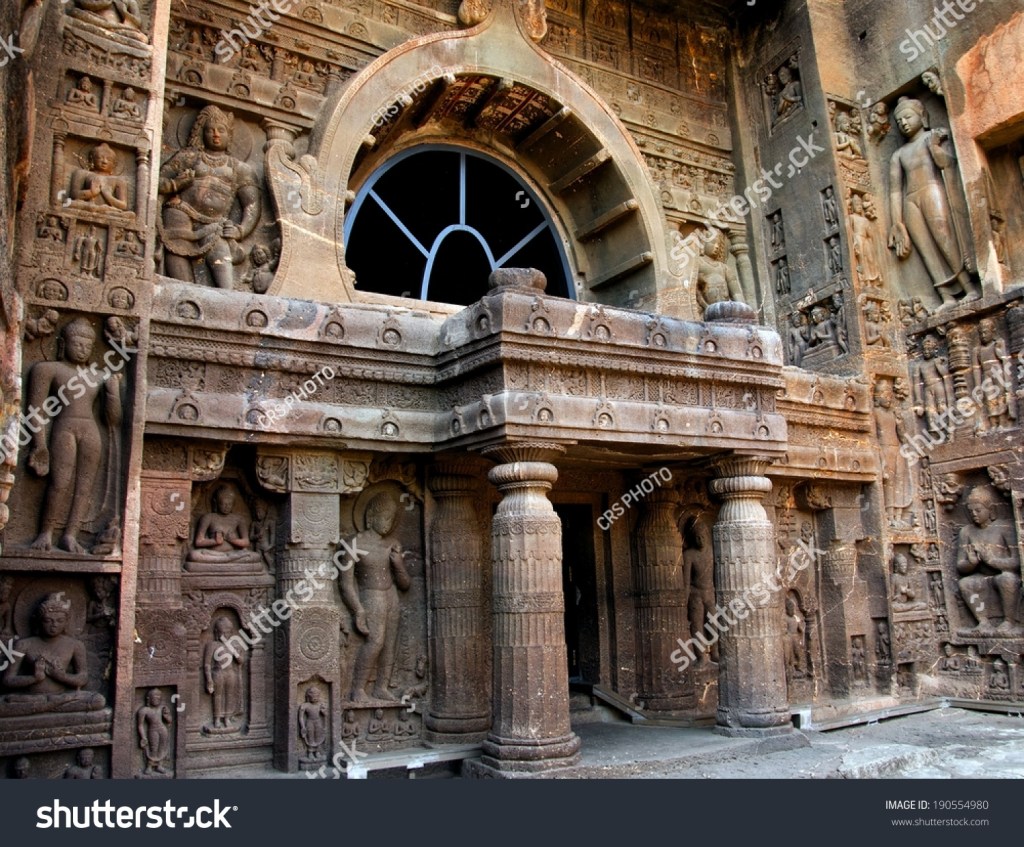
All the entrances of the caves have a semicircular opening above. This opening allows sufficient light into the cave.
All the 30 caves were built in such a manner that right from the first cave to the last, it explains the life of Lord Buddha from its first stage to the last stage, respectively. Out of all these 30 caves, 5 caves are ‘Chaityas’ (prayer rooms) and 25 caves are ‘Viharas’ (residential caves). The architectural design of the Chaityas and the Viharas were distinct.
1. Chaityas:
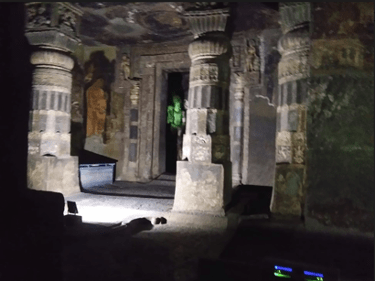
These are considered as a place of worship for those religious monks. The Chaityas were built in rectangular form. As soon as you enter a Chaitya, you would see a series of pillars on each side (left and right). There is also a thin passage between the walls and the pillars. The ceiling are also filled with series of thin and long rectangles. These pillars and the rectangles on the celling represents the repetition of lines in this architecture.
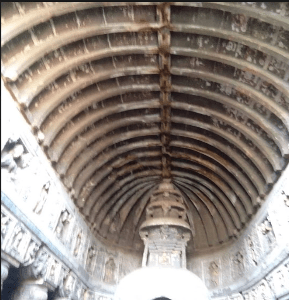
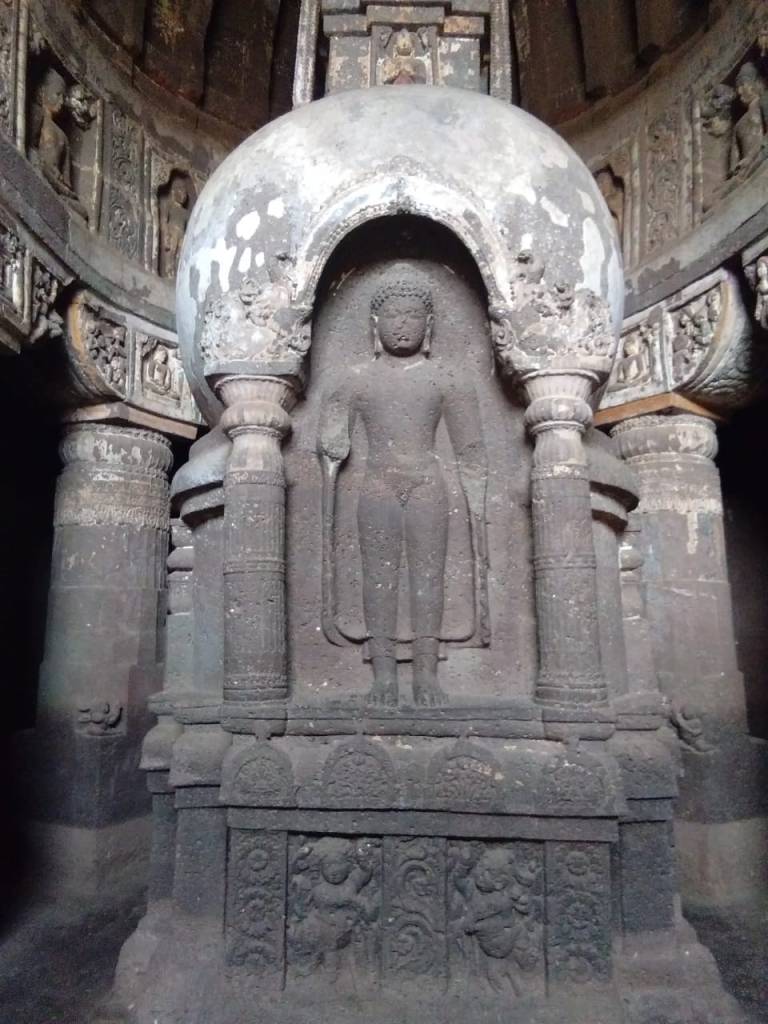
At the very end, in the centre, there is a huge ‘Stupa’ (Buddhist shrine) which was built during the initial stages of construction by the monks of Hinayana phase of Buddhism. According to the ancient Buddhist culture, after the death of a person, people used to burn the dead body and then build a hemispheric dome over the ashes. This hemispheric-shaped dome is called as ‘Stupa’. The monks believed it to be a symbol of Lord Buddha. As over the years, many monks have been worshipping in these Chaityas, I could instantly feel the peace and divinity after entering a Chaitya.
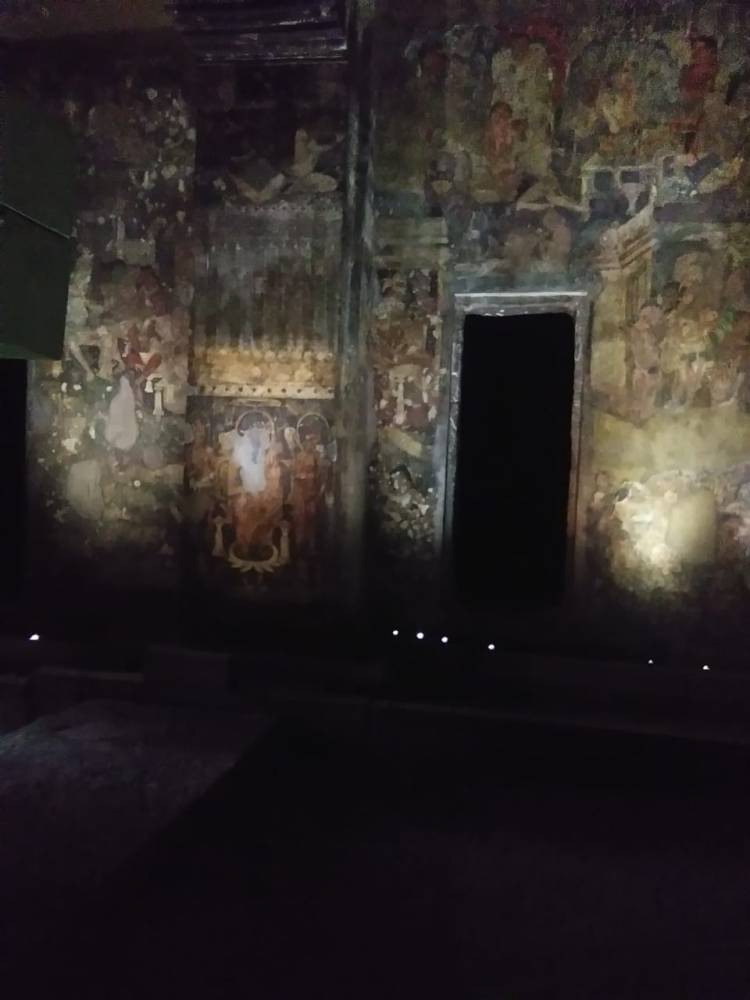
The color is definitely greyish as it is made out of a rock. But, in some places, the artists have also painted the walls. Surprisingly, these colors were made from natural things like flowers, leaves and some mineral stones. When I say that the caves were made out of a rock, you would assume that the texture must be rough. However, the skilled craftsmen have turned the rocky texture into a smoother one.
2. Viharas.
These are the 25 caves which were made for the monks to reside. All the 25 caves were built in similar pattern. So, let me be specific with one out of those. The cave was in the form of square. In the centre there was another huge square which was slightly raised than the other surrounding surface. Pillars were built at the edges of the inner square. The pillars were the most amazing creation by the architects, because they were built in such a way that you can hear the sounds of Tabla (Indian classical musical instrument) when you hit it with your hand.
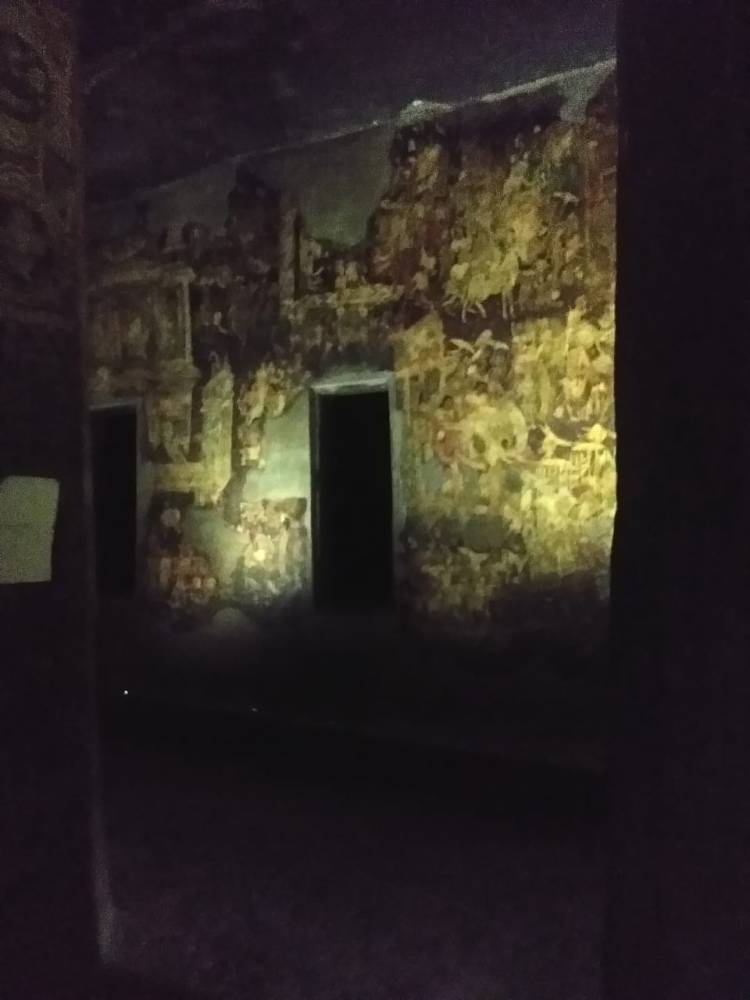
My most favorite part is the cells that were built on each wall. When I entered a cell, I saw a bed which was carved in the same rock, and a small triangular space for the purpose of keeping earthen lamps. In few cells, I also saw some cooking utensils and a pot for storing water. There are also some tanks and small stepwells made at the entrance for preserving water.
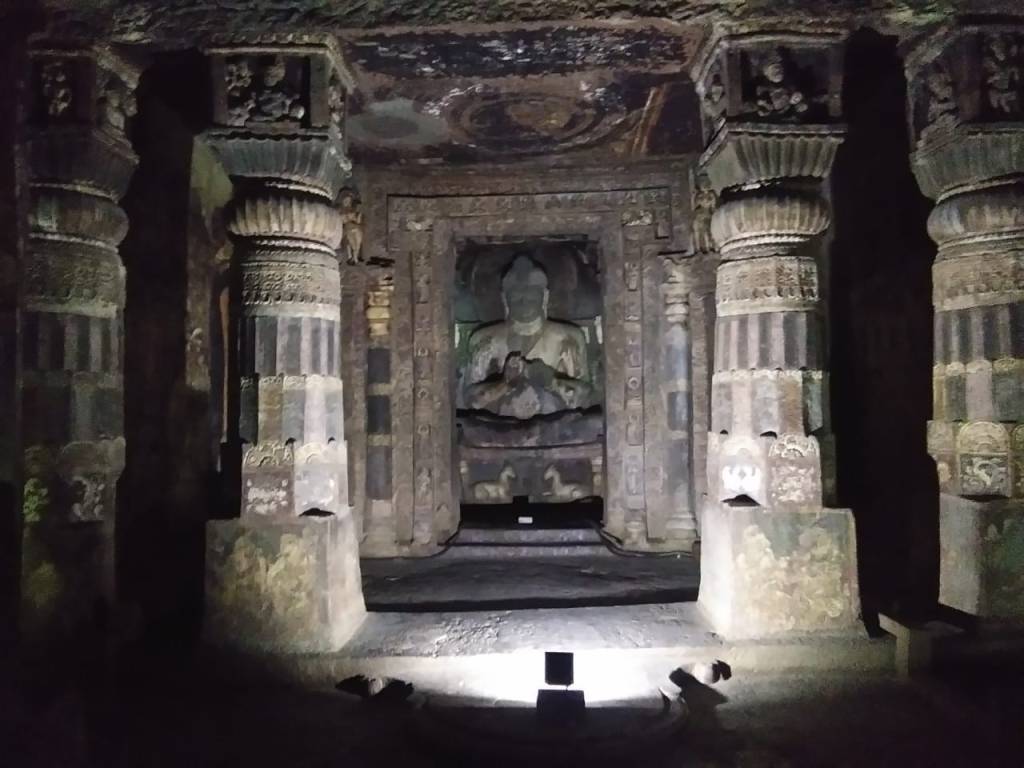
When you enter a vihara, you can spot the ‘Garba griha’ (inner sanctum) with a beautiful and huge sculpture of Lord Buddha. I would mention in detail about it in the sculpture section. You can find the dominant use of lines and shapes all over this place, such as the outer and inner squares, pillars, cells, beds, the inner sanctum, and the water tanks.
Such is the beautiful creation of the caves. However, the sculptures and the paintings enhance the beauty of these caves.
I will describe about the paintings and sculptures in my next blog, Part 2. So please check it out.
Till then, stay safe and healthy!
Pack your bags, fasten your seat belts and get ready to ride!!😎
 Journey Through India.
One thought on “The very first detailed guide to the mesmerizing Ajanta caves. (Part 1)”